.png)

Event Logistics Matter
News
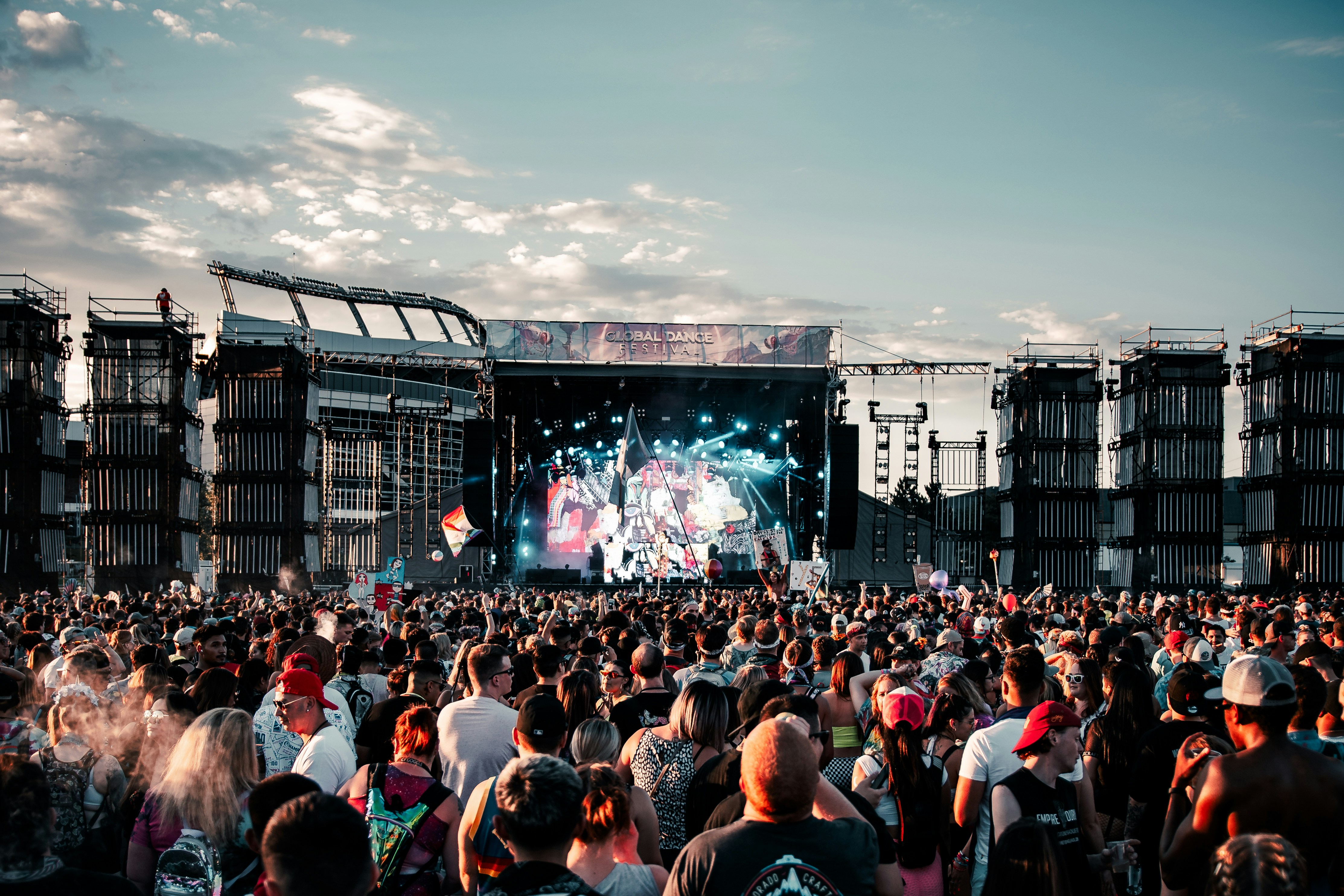
Five ways event logistics can make or break your festival — before a single act plays
The headliner is announced. Tickets sell out in forty minutes. The promoter takes a breath.
Then the real work starts.
Most of what determines whether a festival succeeds or fails operationally has nothing to do with the stage programme. It happens weeks before the event, in spreadsheets and site visits and phone calls with haulage companies — and then again in the hours immediately before gates open, when everything that was planned on paper meets the reality of the ground.
Logistics is the part of event production that audiences never see. They only notice it when it goes wrong.
Here are five areas where inadequate logistics planning turns a promising event into a reputational or financial problem.
1. Load-in scheduling
Every piece of production equipment — staging, sound, lighting rigs, generators, bars, fencing — needs to arrive in the right order, at the right time, via the right access route. Get the sequencing wrong and you create gridlock.
The classic failure mode: a lighting rig lorry arrives before the stage frame it needs to attach to. Both vehicles are now occupying space they can't use productively, blocking the access route for everything that follows. What should be a four-hour load-in becomes eight, and the knock-on effect runs through the entire schedule.
Good logistics planning starts with a load-in matrix — a sequenced, timed plan that coordinates every supplier's arrival against the site's access constraints. It's not glamorous work. It's essential work.
2. Supplier coordination (or the lack of it)
Large events involve dozens of independent suppliers — each with their own point of contact, their own delivery schedule, and their own understanding of where they're supposed to be and when.
Without a central logistics coordinator who has live visibility across all of them, the site becomes a game of telephone. A supplier can't locate their allocated bay. A haulier arrives with the wrong access pass. A production company assumes someone else has handled the equipment storage — they haven't.
The answer isn't more emails. It's a single logistics function with the authority and the relationships to make real-time decisions when things don't go to plan. Because things will not go to plan.
3. Site access and egress design
How people and vehicles move through a festival site is a design problem, and it deserves to be treated as one. Access roads, loading bays, pedestrian routes, emergency vehicle corridors, and crew pathways all need to be mapped and stress-tested before the first vehicle arrives.
The failure here is usually one of assumptions. The site map shows an access road; nobody has checked whether a 40-tonne articulated lorry can actually navigate it. There's an emergency vehicle corridor on paper, but it becomes a crew parking area in practice. A pedestrian bottleneck that looks manageable at 60% capacity becomes dangerous at 100%.
Site access planning needs to be done with people who have operational experience of the specific types of events you're running — and who are willing to push back on a plan that looks neat on a diagram but won't work on the ground.
4. First aid and security integration
Logistics isn't only about equipment and vehicles. It includes the deployment of people — and the coordination between different operational teams on site.
First aid, security, and event control all need to know each other's positions, communication channels, and escalation procedures before the event opens. When these functions are procured separately from different providers with no shared briefing, the gaps between them become the points of failure.
A crowd crush doesn't wait for the right radio channel. A medical emergency at the back of a field needs a clear path to the medical point and a security team that knows to hold it open. These things require planning, not improvisation.
5. The last two hours before gates open
This is where events are won or lost. Every delay that has accumulated during load-in and build arrives here, compressed into the window between scheduled opening and actual readiness. Bars are still being stocked. Power hasn't been connected to the secondary stage. The wristband scanning system isn't live.
And the audience is already queuing outside.
The last two hours require a logistics lead with complete site visibility, the authority to make decisions, and a pre-agreed escalation protocol for the things that genuinely can't be resolved in time. Without that, you're relying on individual departments to self-report problems to a promoter who is simultaneously managing a hundred other things.
This is the moment when the quality of your logistics function becomes visible to everyone — staff, suppliers, audience, and the emergency services if it gets to that point.
What good logistics looks like
The simplest way to describe it: good logistics is invisible. The event opens on time. Equipment is where it needs to be. People know their roles and their communication channels. Problems get resolved before they reach the audience.
That outcome requires experienced coordination, strong supplier relationships, genuine site knowledge, and the kind of operational discipline that comes from running complex events — not reading about them.
Fort Green provides dedicated logistics support across festival and tour environments: haulage coordination, load-in management, 24/7 on-site support, and site management. We work as an integrated function alongside security and production — because the alternative, three separate providers who've never worked together before, is where the problems start.
Planning an event and want to talk through the logistics? Get in touch.
.png)

